
Key Takeaways
- Reiki is a Japanese energy healing practice that works by channeling universal life force energy – called ki – to help restore balance in the body, mind, and spirit.
- A practitioner serves as a conduit for that energy, not the source of it, meaning nothing is forced during a session.
- Early research suggests Reiki can meaningfully reduce stress and pain, though stronger clinical studies are still needed to draw firm conclusions.
- Reiki is deeply spiritual but completely non-religious – it fits alongside nearly any existing belief system or wellness routine.
- Keep reading to understand exactly what happens inside a session, what the science actually says, and why so many people describe it as coming home to themselves.
Reiki Is Not About Doing More
Most wellness advice follows the same pattern: do more, push harder, optimize better. Reiki quietly breaks that mold. Rather than adding another item to the to-do list, Reiki is an invitation to slow down and reconnect with something that was never really lost – just buried beneath the noise of daily life.
At its core, Reiki is a gentle, non-invasive healing practice rooted in the idea that the body already carries an innate intelligence. Stress, grief, chronic tension, and emotional overload can disrupt the natural flow of that intelligence, leaving people feeling exhausted, disconnected, or simply off. Reiki works with the body’s own systems to help restore that flow, rather than overriding it.
According to the Houston specialists from Indigo Light Path, healing is not something forced — it’s something allowed. That distinction is at the heart of what makes Reiki different from most wellness approaches: it works with the body’s own pace, not against it.
“Rei” + “Ki”: What the Word Actually Means
The word Reiki is Japanese, and it breaks down into two parts: Rei, meaning universal or spiritually guided, and Ki, meaning vital life force energy. Together, they describe a practice built on the belief that a living energy moves through all things – every breath, every heartbeat, every blade of grass.
This concept of a life force energy is not unique to Japan. It appears across cultures under different names: chi or qi in Chinese traditions, prana in Sanskrit-based practices. The Japanese system of Reiki, developed by Mikao Usui in 1922, introduced a structured method for working with that energy – through intention, meditation, and hands-on practice – to support healing and personal growth.
How Universal Life Force Energy Works
Energy Already in Motion
Everything in nature is in motion. Seasons shift, rivers move, cells divide – all without conscious effort. Reiki is built on the understanding that human beings are part of that same living system. Life force energy is not something a practitioner creates or manufactures; it is already present, already flowing.
When the body is balanced and that energy moves freely, people tend to feel well – grounded, clear, and resilient. Reiki works with what is already there, gently supporting the body’s return to equilibrium.
What Disconnection Feels Like
Most people know the feeling, even if they do not have a name for it. Persistent fatigue that sleep does not fix. Tension that lives permanently in the shoulders or jaw. A low hum of anxiety that does not seem tied to anything specific. Emotional heaviness that is hard to shake.
Reiki practitioners describe these experiences as signs that the natural flow of life force energy has become disrupted. The body is not broken – it is asking for a chance to reset. That is the opening Reiki steps into.
The Practitioner’s Role: Vessel, Not Source
One of the most commonly misunderstood aspects of Reiki is what the practitioner actually does. The short answer: they get out of the way.
In Usui Reiki, the practitioner is trained to act as a clear channel – a conduit through which universal life force energy flows to the recipient. They do not generate healing, direct it, or manufacture an outcome. The energy moves with its own intelligence, going where it is most needed. The practitioner holds space with presence, humility, and intention, but the process belongs to the person receiving it.
This is why Reiki sessions do not feel clinical or transactional. There is no fixing happening. There is only a quiet, attentive witnessing – and energy that responds to it.
What Happens During a Session
Hands-On or Hands-Above Placement
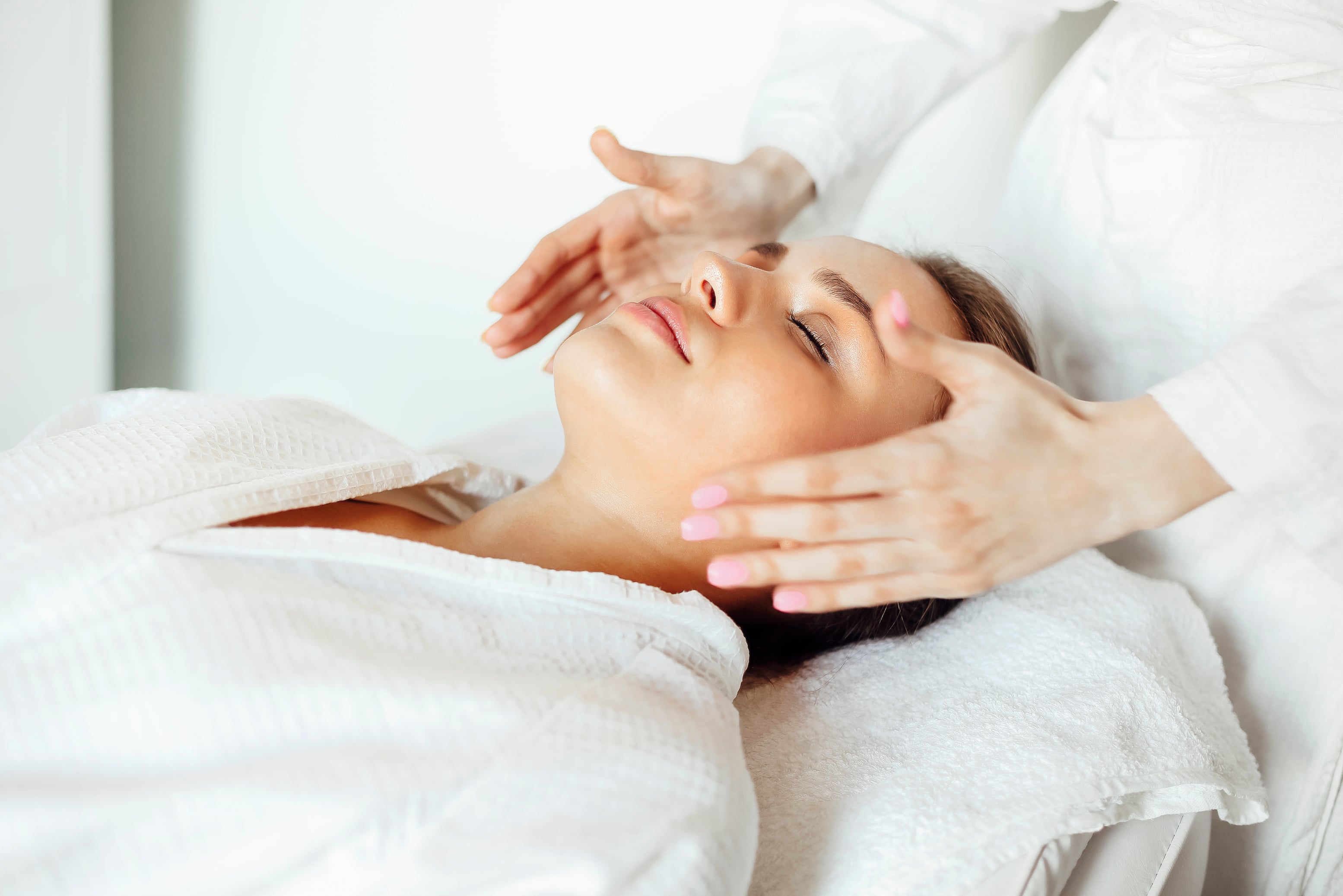
A typical Reiki session begins with the recipient lying fully clothed on a treatment table or seated comfortably in a chair. The practitioner then places their hands either gently on the body or just above it, moving through a series of intentional positions that generally follow key areas: the head, shoulders, upper back, heart, and lower extremities. Touch or no touch is always the recipient’s choice.
What the Experience Might Feel Like
Experiences vary widely, and that is by design. Reiki is not a one-size-fits-all sensation. Some people notice warmth radiating from the practitioner’s hands, even when there is no physical contact. Others feel gentle tingling, waves of relaxation, or an emotional release they did not expect. Some simply drift into a deep, restful stillness – the kind that has become rare in modern life.
There is no right or wrong response. Each session meets the person exactly where they are.
What Research Says – And Where It Falls Short
Promising Early Findings
Research interest in Reiki has grown steadily over the past two decades, and some findings are genuinely encouraging. A 2024 systematic review of five studies conducted with cancer patients found that Reiki sessions significantly reduced fatigue, pain, and stress while improving quality of life – with no reported side effects. Institutions including the Mayo Clinic, Cleveland Clinic, Yale-New Haven Hospital, and Brigham and Women’s Hospital have all established formal Reiki programs, with Memorial Sloan-Kettering Cancer Center beginning to offer it to chemotherapy patients as early as 1998.
Why Stronger Studies Are Still Needed
The National Center for Complementary and Integrative Health (NCCIH) notes that most clinical research into Reiki is still in its infancy, and results across studies remain inconsistent. Many trials lack control groups, use small sample sizes, or rely entirely on self-reported measures. Scientifically, there is currently no verified mechanism that explains how universal life force energy operates at a biological level.
That does not mean the experiences people report are not real; just that the research has not fully caught up to those experiences yet. Reiki continues to show enough promise that institutions keep studying it – and enough safety that it is consistently described as a low-risk complement to conventional care, not a replacement for it.
Reiki Is Spiritual – Not Religious
This distinction matters to a lot of people. Reiki is a spiritual practice in the sense that it works with dimensions of the self that go beyond the physical – the emotional, the energetic, the soulful. It is not tied to any religion, doctrine, or belief system.
Mikao Usui’s original framework drew from Buddhist and Shinto influences, but as Reiki spread globally it shed any denominational affiliation. Today it is practiced by people of Christian, Jewish, Muslim, Hindu, and secular backgrounds alike. Whatever someone calls the sacred – God, Spirit, the Universe, or simply nature – Reiki fits alongside it without friction. It asks nothing of the recipient except a willingness to receive.
Can Reiki Help Someone Come Home to Themselves?
For people in Houston navigating chronic stress, pain that has not responded fully to conventional treatment, or a quiet but persistent sense of spiritual disconnection, Reiki offers something genuinely different. Not a cure. Not a promise. Just a dedicated hour to stop pushing and start listening – to the body’s signals, to the breath, to whatever needs to move.
The benefits people most often describe after sessions include a deep calm that lingers well past the treatment table, emotional softening, improved sleep, mental clarity, and a renewed sense of alignment between mind, body, and spirit. For some, it becomes a regular part of their wellness routine. For others, a single session is enough to shift something that had been stuck for a long time.
Healing rarely arrives as a dramatic breakthrough. More often it comes quietly – as a breath that reaches somewhere deeper than usual, or a feeling of peace that, for the first time in a long while, actually feels like home.
Indigo Light Path
(713) 732-1651
2990 Richmond Avenue #650
Houston
TX
77098
United States


