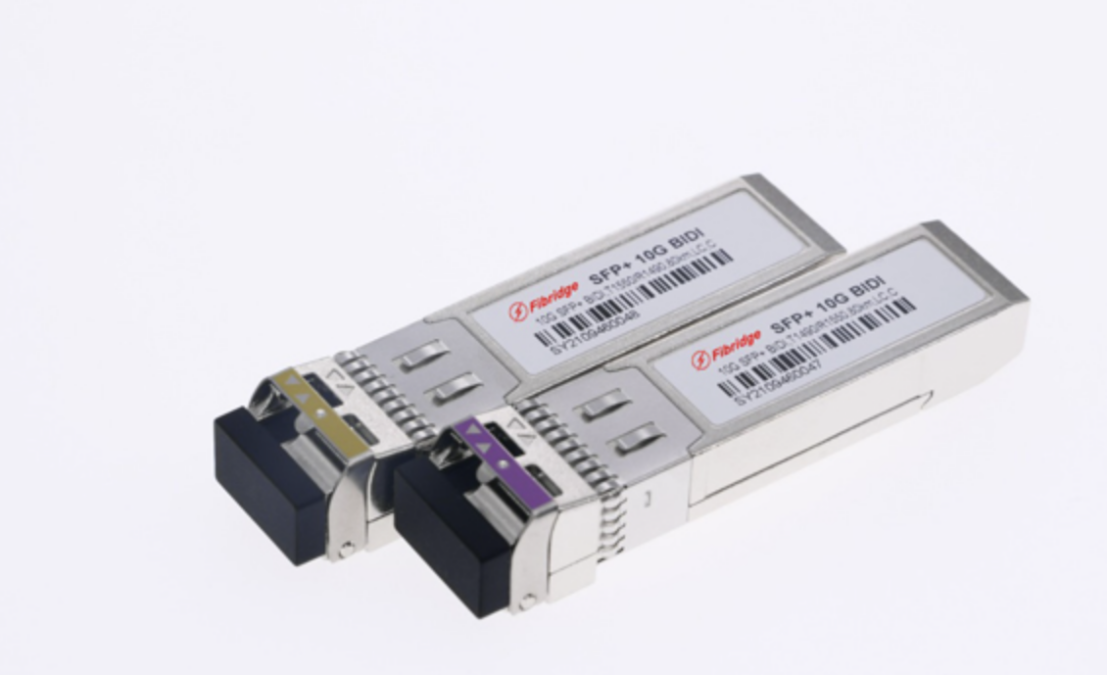
BEIJING, CHINA, August 19, 2026 /EINPresswire.com/ — The rapid growth of enterprise networking, industrial automation, and telecommunication infrastructure has made Small Form-factor Pluggable (SFP) optical modules an indispensable component in modern data transmission. As compact, hot-swappable transceivers used for both telecommunication and data communications applications, SFP modules interface network device motherboards (such as switches, routers, and media converters) to fiber optic or copper networking cables. Selecting the correct transceiver type is vital for ensuring link performance, system stability, and cost-efficiency. As a professional Common SFP Optical Module Supplier, Fibridge delivers a broad portfolio of high-performance optical modules designed to fulfill diverse distance, bandwidth, and environmental requirements across global communication networks.
Understanding how to classify and select these components requires an evaluation of key optical properties, interface standards, transmission media, and operational environments. The following guide outlines the primary categories of SFP optical modules and provides structured recommendations for selecting the appropriate transceiver for specific deployment scenarios.
A. Classification of SFP Optical Modules by Transmission Distance and Wavelength
Optical modules operate across different wavelengths and light sources tailored to specific distance requirements. Choosing the correct wavelength and optical receiver sensitivity ensures that signal attenuation remains within acceptable thresholds over the target distance.
Short-Reach (SR) Modules
Short-reach SFP modules typically operate at an 850 nm wavelength over Multi-Mode Fiber (MMF). Designed primarily for short-distance transmissions within data centers, local area networks (LANs), and enterprise server rooms, SR modules support transmission distances ranging from 100 meters to 500 meters depending on the fiber grade (such as OM2, OM3, or OM4). They utilize VCSEL (Vertical-Cavity Surface-Emitting Laser) light sources, providing a cost-effective solution for high-density, intra-building connections.
Long-Reach (LR) Modules
Long-reach modules are engineered for Single-Mode Fiber (SMF) links operating at 1310 nm wavelengths. Utilizing Fabry-Perot (FP) or Distributed Feedback (DFB) lasers, LR modules support transmission distances up to 10 km or 20 km without needing intermediate signal amplification. These modules are widely deployed in campus backbones, metropolitan area networks (MANs), and enterprise links bridging geographically separated facilities.
Extended-Reach (ER) and Zero-Dispersion (ZR) Modules
For long-haul optical transport, Extended-Reach (ER) modules operate at 1550 nm over Single-Mode Fiber, reaching transmission distances of up to 40 km. Zero-Dispersion (ZR) modules push operational distances further, supporting ranges up to 80 km or 120 km over single-mode fiber using Electro-Absorption Modulated Lasers (EML) and high-sensitivity APD (Avalanche Photodiode) receivers. These transceivers are critical for regional telecom backbones, utility monitoring networks, and remote industrial links.
B. Specialized SFP Modules for Optimized Fiber Utilization
Beyond standard dual-fiber transceivers, specialized optical module architectures exist to address bandwidth bottlenecks and physical cabling constraints.
Bidirectional (BiDi) Single-Fiber Modules
BiDi SFP modules utilize Wavelength Division Multiplexing (WDM) technology to transmit and receive signals over a single strand of optical fiber. By operating at complementary wavelength pairs (such as 1310 nm/1490 nm or 1310 nm/1550 nm), BiDi modules effectively double the bandwidth capacity of existing fiber infrastructure without requiring new cable deployments. This makes BiDi transceivers an efficient choice for resource-constrained fiber environments in municipal networks and fiber-to-the-x (FTTx) access applications.
Coarse and Dense Wavelength Division Multiplexing (CWDM/DWDM) Modules
CWDM and DWDM SFP transceivers allow multiple optical channels to be multiplexed onto a single fiber pair by using precise, distinct wavelengths. CWDM modules operate across 18 channels spaced 20 nm apart, suitable for cost-effective capacity expansions up to 80 km. DWDM modules feature much tighter channel spacing (0.8 nm or 0.4 nm), enabling dozens of high-speed data streams over long distances. These specialized modules allow network operators to scale aggregate bandwidth seamlessly without altering underlying passive fiber plants.
Copper RJ45 SFP Modules
Copper SFP transceivers convert an optical SFP port into an RJ45 copper interface, permitting standard Cat5e, Cat6, or Cat6a twisted-pair cabling connections over distances up to 100 meters. They provide a flexible bridge between legacy copper infrastructure and modern optical networking hardware, reducing total hardware expenditure during phased network upgrades.
C. Engineering Criteria and Selection Methodology for Optimal Deployment
Selecting the ideal optical transceiver involves matching technical parameters against physical network constraints. Key parameters to analyze include:
Data Rate and Interface Compatibility
Ensure the transceiver speed aligns with host port capabilities. SFP modules generally support rates up to 1.25 Gbps or 2.5 Gbps, while SFP+ handles 10 Gbps, SFP28 supports 25 Gbps, and SFP56 addresses 50 Gbps. Dual-rate modules are also available for environments transitioning between legacy and higher-bandwidth protocols.
Transmission Distance and Fiber Type
Match the module’s optical power budget with the physical distance and cable type. Single-mode fiber is essential for distances exceeding 550 meters, while multi-mode fiber remains the primary choice for short indoor spans. Calculating total insertion loss—including cable attenuation, splice points, and patch panel connectors—prevents optical overload or excessive signal degradation.
Environmental Operating Range
Commercial-grade modules operate within 0°C to 70°C, adequate for climate-controlled data centers. Industrial-grade modules are rated for extreme temperatures ranging from -40°C to 85°C, featuring hardened components to withstand thermal fluctuations, electromagnetic interference, and mechanical shock in harsh outdoor environments, transportation systems, and energy substations.
D. Industrial Realities and Field Applications: Practical Case Insights
In real-world field installations, technical theoretical capabilities must translate into stable, continuous operation. Optical networking environments in critical infrastructure projects—such as intelligent transportation systems, highway monitoring, metro transit lines, and smart grid sub-stations—demand transceivers capable of enduring extreme operational stress.
In high-density industrial control scenarios, network engineers frequently encounter issues related to severe temperature shifts, voltage instability, and high humidity. Field installations show that standard commercial modules deployed in non-controlled outdoor cabinets often experience accelerated laser degradation, leading to packet loss and link dropouts.
Deploying industrial-grade SFP modules equipped with real-time Digital Diagnostics Monitoring (DDM) allows network administrators to proactively monitor transmitter bias current, optical output power, receiver input power, supply voltage, and module temperature. In critical monitoring networks, such telemetry enables automated alerts before link failure occurs, ensuring zero operational downtime for municipal traffic management and industrial supervisory systems.
E. Technical Innovation and Reliability Assurance: The Fibridge Distinction
Selecting high-performance optical modules requires reliance on proven manufacturing expertise and stringent quality control standards. Established in 1995, Beijing Fibridge Co., Ltd. brings nearly three decades of dedicated engineering expertise to the optical transmission field. Certified as a high-tech enterprise by the Ministry of Science and Technology of China, Fibridge combines complete research and development, manufacturing, and systems integration to serve clients across more than 100 countries.
Rigorous Testing and Quality Compliance
To guarantee network stability, optical transceivers undergo thorough multi-stage verification. Fibridge products comply with rigorous international standards, possessing official network access qualification test reports and international certifications. Every SFP module undergoes 100% full-parameter testing, including optical power measurements, eye-diagram testing for signal integrity, bit error rate (BER) checks, and temperature cycling in environmental burn-in chambers. This ensures total interoperability across multi-vendor switch platforms and long-term reliability in field operations.
End-to-End Customization and Technical Support
Fibridge offers tailored optical transmission solutions, customizing wavelength allocations, transmission distances, and form factors to address specialized client architecture requirements. Backed by dedicated engineering teams, Fibridge maintains a customer-centric service framework, offering technical consultation, network design validation, and post-deployment support to maximize cost-effectiveness and network uptime.
For comprehensive product specifications, technical documentation, and optical networking solutions, please visit the official corporate portal:
https://www.fibridge.com/
Beijing Fibridge Co., Ltd.
Beijing Fibridge Co., Ltd.
‘+86 10 58858988
email us here
Legal Disclaimer:
EIN Presswire provides this news content “as is” without warranty of any kind. We do not accept any responsibility or liability
for the accuracy, content, images, videos, licenses, completeness, legality, or reliability of the information contained in this
article. If you have any complaints or copyright issues related to this article, kindly contact the author above.

Media gallery