
Three Scalp Conditions May Point to a Single Syndrome, New Study Finds
PR Newswire
MANHATTAN BEACH, Calif., Aug. 31, 2026
Three patients shared nape scars, painful scalp inflammation, deep folds and related biopsy findings
MANHATTAN BEACH, Calif., Aug. 31, 2026 /PRNewswire/ — Dr. U Hair and Skin Clinic researchers report a possible syndrome linking acne keloidalis nuchae (AKN), scalp-wide dissecting cellulitis (DCS) and secondary cutis verticis gyrata (CVG). Their paper, “A Candidate Syndromic Triad of Acne Keloidalis Nuchae, Dissecting Cellulitis, and Secondary Cutis Verticis Gyrata,” was published Aug. 28 in Clinical, Cosmetic and Investigational Dermatology.
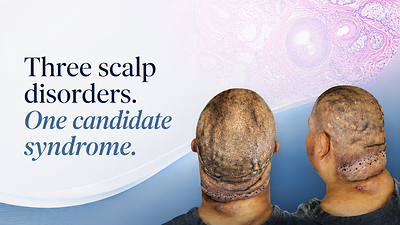
AKN causes inflamed bumps, thick scars or large masses at the back of the scalp. DCS causes painful, boggy or draining scalp lumps and permanent hair loss from scarring. CVG creates deep scalp folds and grooves.
“These conditions can be diagnosed and treated separately, so their relationship may be missed,” said lead author Sanusi Umar, MD. “All three showed the same severe pattern across the same scalp regions, reported the same sequence of onset, and had related biopsy findings. Recognizing it may help patients reach specialist care sooner and help clinicians assess the whole scalp.”
Study findings
Researchers reviewed 12 consecutive men with suspected or confirmed DCS at one Los Angeles clinic from December 2022 to November 2024. Each underwent a full scalp and nape examination, magnified scalp assessment with trichoscopy, and multisite biopsies reviewed by two board-certified dermatopathologists.
Three men, ages 30 to 40, met predefined criteria: class II or III tumorous AKN, DCS in at least three scalp zones and CVG in at least three zones. All reported nape disease first, followed one to two years later by widespread scalp inflammation and furrowing.
Biopsies supported AKN at the nape and DCS on the scalp. Normal-looking scalp in all three showed PIILIF, a pattern of lymphocytic inflammation and early fibrosis around the upper hair follicle. Samples from AKN, DCS and normal-looking scalp shared a similar immune-cell pattern, with more CD4-positive than CD8-positive T cells and prominent CD117-positive mast cells.
One patient’s father showed a similar but unconfirmed clinical pattern: a nape plaque suggestive of AKN, boggy scalp lesions suggestive of DCS, diffuse CVG and a history of severe cystic acne involving the face and body. This father-son pattern raises the possibility of shared susceptibility.
Why it matters
CVG may signal more extensive disease. An earlier 108-patient AKN study identified a candidate AKN-CVG syndrome: CVG occurred in three of seven patients with scalp-wide AKN, compared with one of 101 without scalp-wide disease. In the affected scalp-wide cases, AKN preceded CVG by one to two years. The new study extends that pattern by adding scalp-wide DCS supported by examination and biopsy.
For people with AKN, new scalp folds or widespread boggy, painful or draining lumps should prompt a full-scalp check for DCS. In DCS, clinicians should examine the nape for AKN. Trichoscopy-guided biopsies from several sites can help clarify the diagnosis. Recognizing the pattern may support timely specialist care for those at risk of permanent scarring, scalp remodeling and disfigurement.
A companion DCS study found PIILIF in normal-looking scalp and inactive lesions, while active lesions showed additional pus-forming inflammation. Together, the findings suggest PIILIF may be a scalp-wide process linking AKN and DCS, while secondary CVG may reflect later scarring and remodeling.
About Dr. Sanusi Umar
Sanusi Umar, MD, is a board-certified dermatologist, founder and medical director of Dr. U Hair and Skin Clinic in Manhattan Beach, California, and head of Scalp and Hair Disorders at Harbor-UCLA Medical Center. He specializes in complex and scarring hair loss.
Learn more about PIILIF and when to seek evaluation.
Media Contact
Shelley Buckner
PR Coordinator, Dr. U Hair and Skin Clinic
+1-310-318-1500
contentdept2@dru.com

 View original content to download multimedia:https://www.prnewswire.com/news-releases/three-scalp-conditions-may-point-to-a-single-syndrome-new-study-finds-302864423.html
SOURCE Dr. U Hair and Skin Clinic

Media gallery


