Key Takeaways
- Single axle cargo trailers typically offer 2,000-2,500 pounds of actual payload capacity with a 3,500-pound GVWR, while tandem axle models can carry 3,500-14,000 pounds with better weight distribution.
- Tandem axle trailers provide crucial safety features like tire blowout protection and improved stability at highway speeds.
- Understanding GVWR (Gross Vehicle Weight Rating) prevents dangerous overloading that can cause brake strain, tire failure, and loss of control.
- Real-world examples from dealer inventory show how axle configuration directly impacts your hauling capacity and operational costs.
Choosing between single and tandem axle configurations affects everything from purchase price to safety on the highway — a decision that matters whether you’re a weekend hauler in Illinois or a contractor running commercial loads year-round.
GVWR: The Crucial Rating
GVWR represents the maximum total weight a trailer can safely handle when fully loaded. This rating includes both the trailer’s empty weight and its cargo capacity. Exceeding GVWR creates serious safety risks, including increased brake strain, axle stress, tire failure, frame fatigue, and potential loss of control.
Payload capacity (the actual amount of cargo you can carry) is calculated by subtracting the trailer’s empty weight from its GVWR. For example, a trailer with a 7,000-pound GVWR that weighs 1,500 pounds empty can safely carry 5,500 pounds of cargo. This calculation becomes the foundation for choosing the right axle configuration for your needs.
Single Axle Cargo Trailers: Light Loads, Big Savings
Single axle cargo trailers work best in situations where lighter loads and cost efficiency take priority — and for many Illinois homeowners and small business owners, that’s exactly the use case. These trailers typically feature one axle with two tires, creating a simpler design that translates to lower upfront costs and reduced maintenance expenses.
1. Capacity Range: 2,000 to 2,500 Pounds Actual Payload
Single axle trailers with a 3,500-pound GVWR typically provide 2,000 to 2,500 pounds of actual payload capacity after accounting for the trailer’s empty weight. This capacity works well for hauling lawn equipment, motorcycles, ATVs, light construction materials, or household goods during moves. The single axle design keeps the trailer’s own weight minimal, maximizing available payload within the GVWR limits.
2. Lower Purchase and Maintenance Costs
The simpler construction of single-axle trailers results in significantly lower purchase prices compared to tandem-axle models. Maintenance costs remain minimal due to fewer components – just two tires instead of four, one axle instead of two, and simpler brake systems. These savings make single-axle trailers attractive for occasional users or budget-conscious buyers who don’t need maximum capacity.
3. Superior Maneuverability in Tight Spaces
Single-axle trailers perform well in urban environments and tight spaces where maneuverability matters most. Their shorter length and lighter weight make them easier to navigate through parking lots, residential streets, and loading areas. The single pivot point creates tighter turning radii, allowing drivers to back into narrow driveways or navigate crowded job sites with confidence.
Tandem Axle Cargo Trailers: Heavy Duty Performance
Tandem axle configurations transform cargo trailers into heavy-duty workhorses capable of handling substantial loads with improved stability and safety. These trailers feature two axles with four tires total, distributing weight more effectively across the road surface.
1. Capacity Range: 3,500 to 14,000 Pounds
Tandem axle trailers typically handle loads ranging from 3,500 to 14,000 pounds, depending on axle ratings. Common GVWR ratings include 7,000 pounds with dual 3,500-pound axles, 10,000 pounds with dual 5,000-pound axles, and up to 14,000 pounds with dual 7,000-pound axles. This expanded capacity accommodates heavy equipment, multiple vehicles, substantial construction materials, or commercial inventory.
2. Four-Tire Weight Distribution Advantage
The four-tire configuration spreads weight more evenly across the road surface, reducing individual tire stress and improving overall stability. This weight distribution becomes particularly beneficial at highway speeds or when traveling over rough terrain. The dual axles also help prevent damage to paved surfaces and reduce wear on the trailer’s suspension components during heavy loading scenarios.
3. Built-in Safety: Tire Blowout Protection
One of the most significant safety advantages of tandem axle trailers involves tire failure protection. If one tire experiences a blowout, the second axle helps maintain control and stability, allowing drivers to safely navigate to the roadside. This redundancy proves invaluable when hauling valuable cargo or traveling at highway speeds, where tire failure could otherwise create dangerous situations.
Real-World Capacity Examples
Examining actual trailer specifications helps clarify how axle configurations translate to real-world hauling capabilities.
Single Axle Models with 3500# Axles
A 6′ x 12′ single axle enclosed cargo trailer with a 3,500-pound axle represents a typical single axle capacity. With features like .080 polycore exterior, rear ramp door, and 6’6″ interior height, this model balances cargo protection with manageable weight limits. The single 3,500-pound axle provides adequate capacity for tools, equipment, or household goods while maintaining good fuel economy and maneuverability.
Tandem Axle 7k GVWR (Dual 3500# Axles)
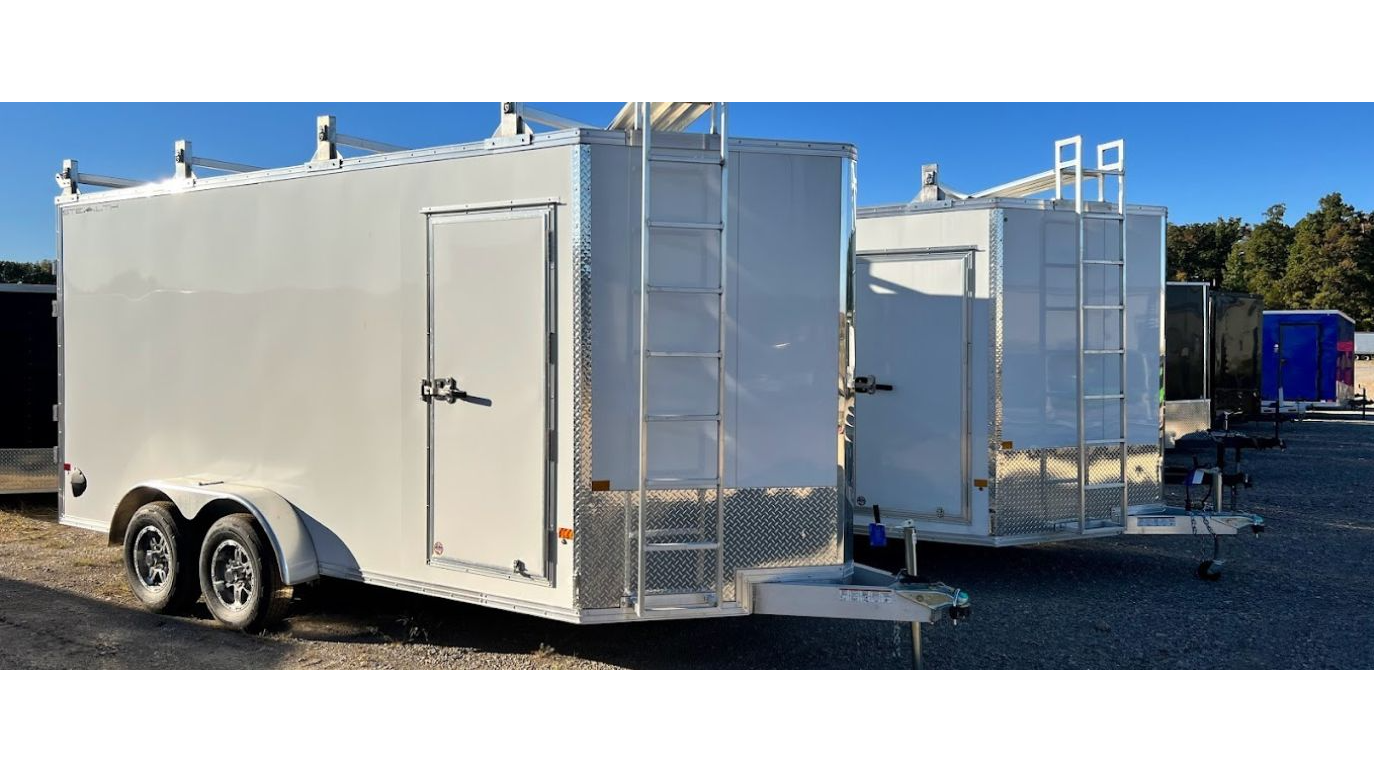
A 7′ x 12′ tandem axle model with dual 3,500-pound axles creates a 7,000-pound GVWR configuration. This setup nearly doubles the capacity compared to single axle models while maintaining moderate overall weight. The dual axle configuration provides improved stability for highway towing and better weight distribution for protecting both the trailer and tow vehicle.
Tandem Axle 10k GVWR (Dual 5200# Axles)
An 8.5′ x 20′ enclosed cargo trailer featuring dual 5,200-pound axles achieves a 10,000-pound GVWR rating. This configuration handles substantial commercial loads, multiple pieces of equipment, or dense materials like lumber or metal supplies. The larger size, combined with higher capacity, makes these trailers suitable for contractors, retailers, or anyone requiring maximum hauling capability in an enclosed format.
Choosing Your Axle Configuration: Match Capacity to Your Needs
The decision between single and tandem axle configurations should align with your actual hauling requirements rather than maximum theoretical needs. Consider the heaviest loads you regularly transport, not occasional peak demands that might occur once or twice per year.
Single axle trailers work well for landscapers hauling mowers and tools, motorcycle enthusiasts transporting bikes, or homeowners managing seasonal moves and storage. The lower purchase price and operating costs make financial sense when capacity requirements stay below 3,000 pounds consistently.
Tandem axle models are needed when regular loads exceed 3,500 pounds or when highway stability matters most. Contractors hauling heavy tools, retailers moving inventory, or anyone transporting valuable equipment benefit from the improved stability and tire failure protection that dual axles provide.
The capacity difference between configurations often justifies the additional cost, especially for commercial applications where downtime from equipment failure creates expensive delays. Consider not just current needs, but potential future requirements that might develop as businesses grow or hauling demands change — something Illinois contractors and dealers consistently point to when advising buyers. Taking time to map out your typical loads and hauling distances before buying will go a long way toward making the right call.
Poplar Bluff Trailer
135 Hwy T Suite B
Poplar Bluff
Missouri
63901
United States


